



UCS512B Pixel Protocol
Manufacturer: Shenzhen UcsThe UCS512B is a single-wire, DMX512-style RGB pixel driver IC in an SOP8 package, running a 5 to 24V pixel supply with 8-bit per-channel colour.
Specifications
| Specification | Detail |
|---|---|
| Clock Type | Serial DMX (Single Wire) |
| Color Resolution | 8 Bits |
| Physical Package | SOP8 |
| RGB | Yes |
| RGBW | No |
| Output Pixel Voltage | 5 - 24V |
| PWM Rate | 3000Hz |
| Suitable Camera | Up to 100fps |
| Redundant Data Line | No |
Strengths
- Single-wire wiring carries data and power only, with no dedicated clock conductor, so cabling is simpler and there is one fewer point of failure than a two-wire clocked chip.
- The DMX512-style asynchronous serial format uses a defined bit timing that gives usable noise tolerance over practical cable runs without needing a separate clock line.
- The 3kHz PWM output is comfortably flicker-free for camera work up to 100fps, and the wide 5 to 24V pixel supply allows higher-voltage strings that reduce voltage drop versus 5V-only parts.
Limitations
- Colour depth is 8 bits per channel (256 levels, 24-bit RGB) and the part is RGB only with no dedicated white channel, so very low-end dimming can show visible steps compared with higher-bit-depth or RGBW drivers.
- There is no redundant data line, so a single cable break or failed IC halts everything downstream: plan injection points and consider this for any critical install.
Overview
The UCS512B is a single-wire, self-clocking RGB pixel driver that decodes a DMX512-style asynchronous serial stream, so data and timing travel on one conductor with no separate clock line. Each IC provides 8-bit per-channel colour (24-bit RGB), a 3kHz PWM output, and operates across a 5 to 24V pixel supply in an SOP8 package. Its defined async timing makes it well suited to smooth gradients and medium-length runs, and its refresh is comfortably flicker-free for camera work up to 100fps. It is commonly attributed to Shenzhen Ucs. ENTTEC is not affiliated with Shenzhen Ucs.
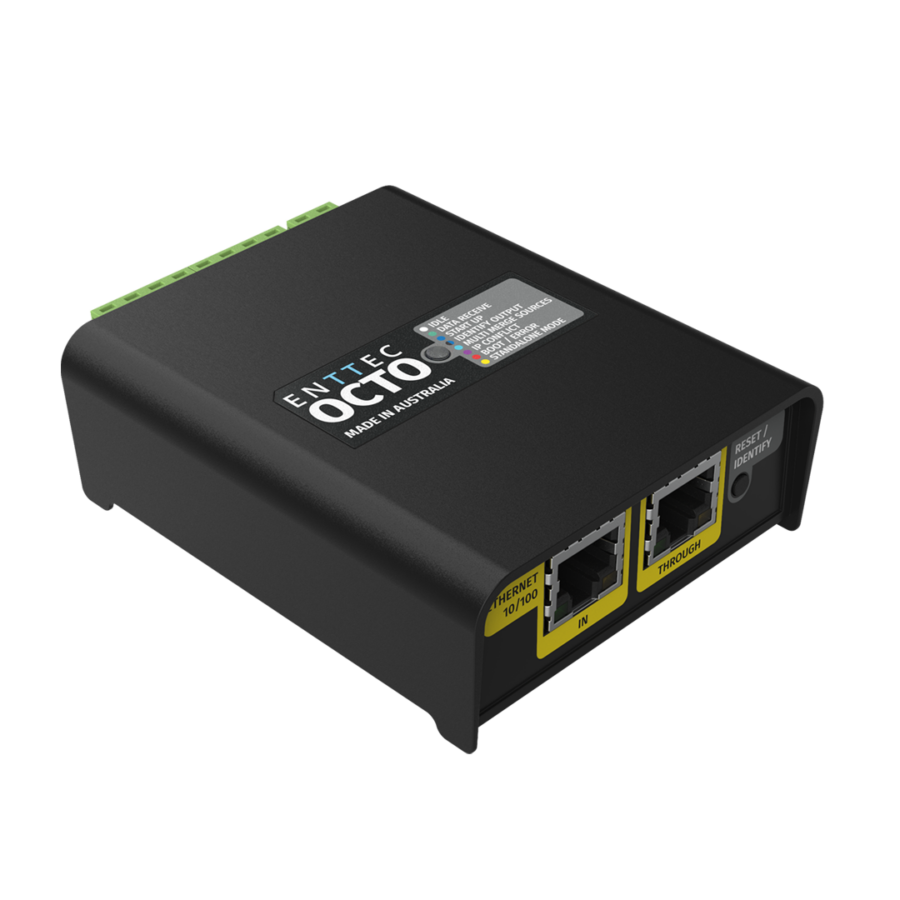
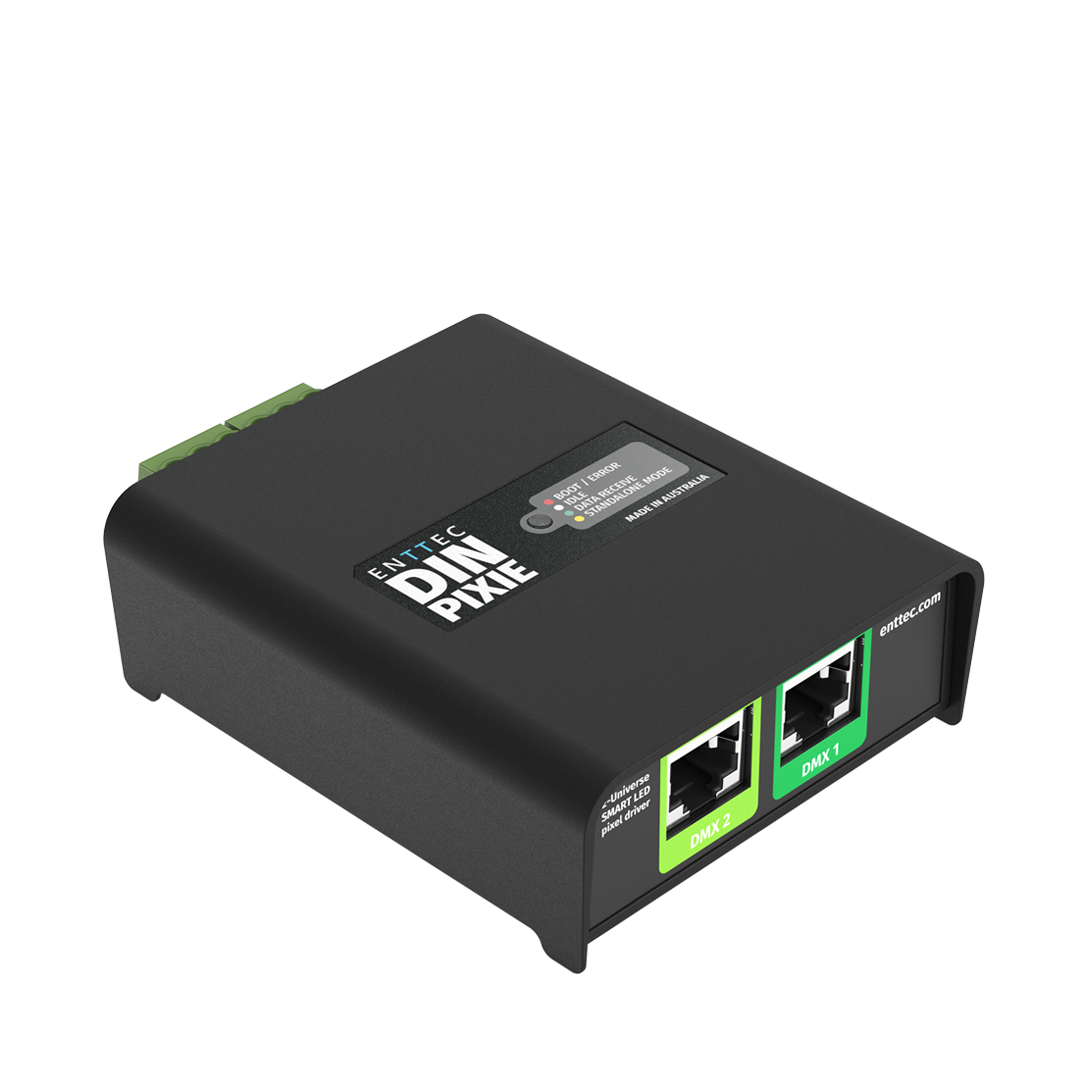
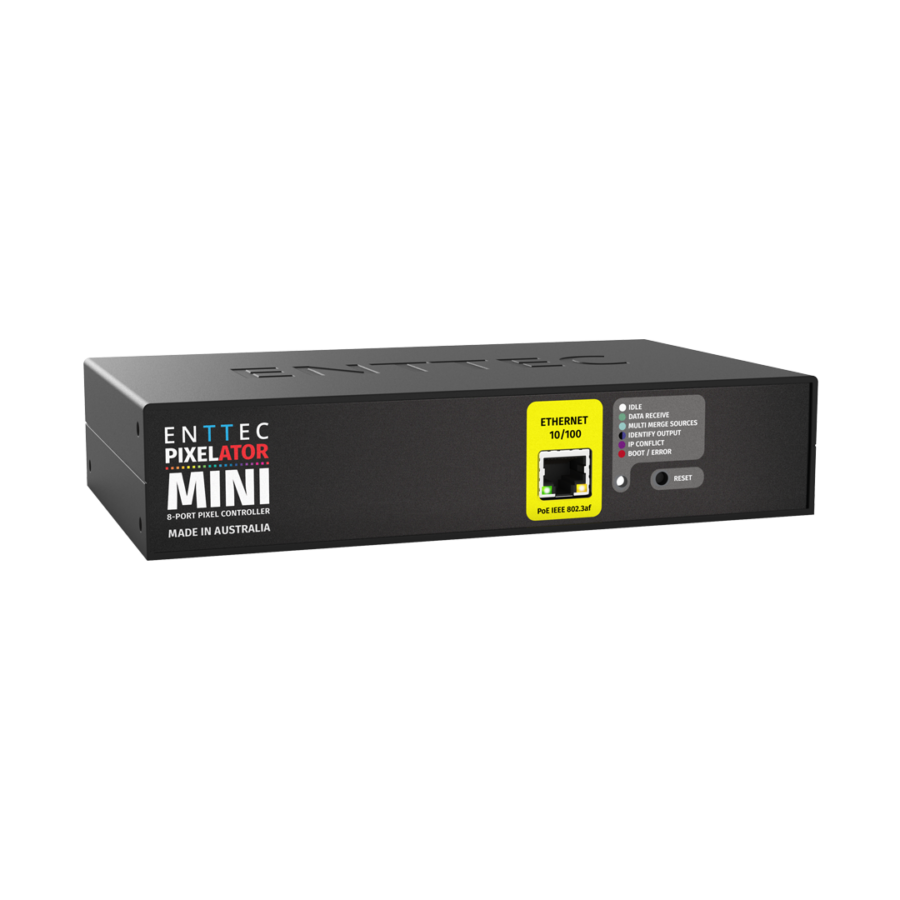
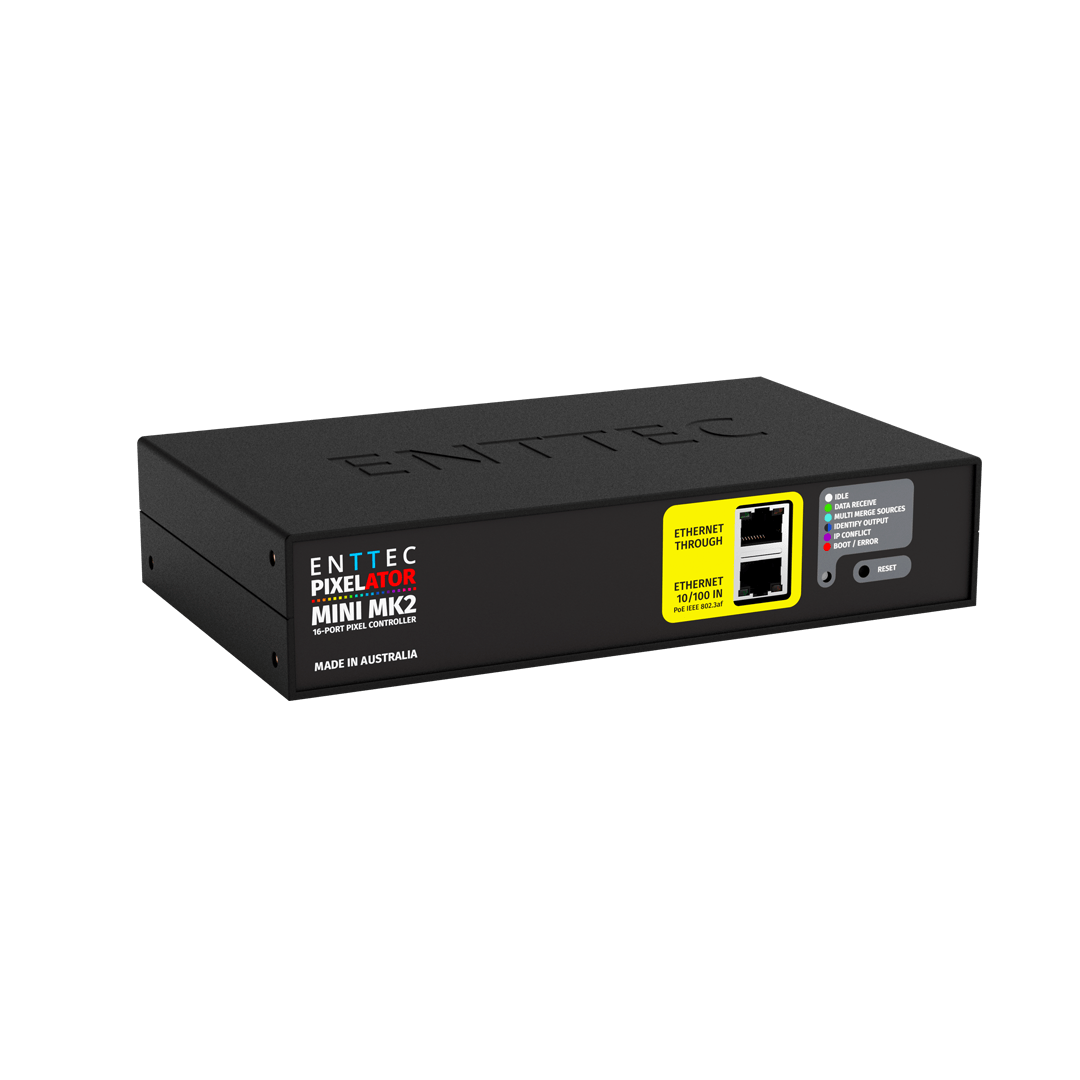
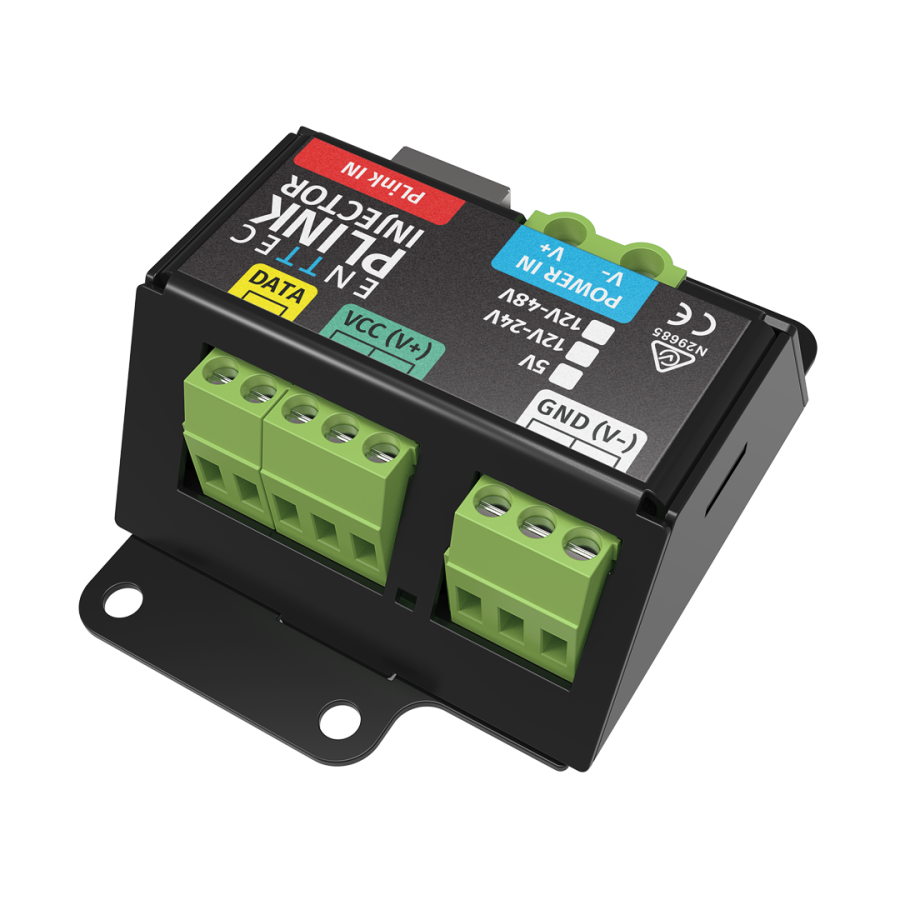
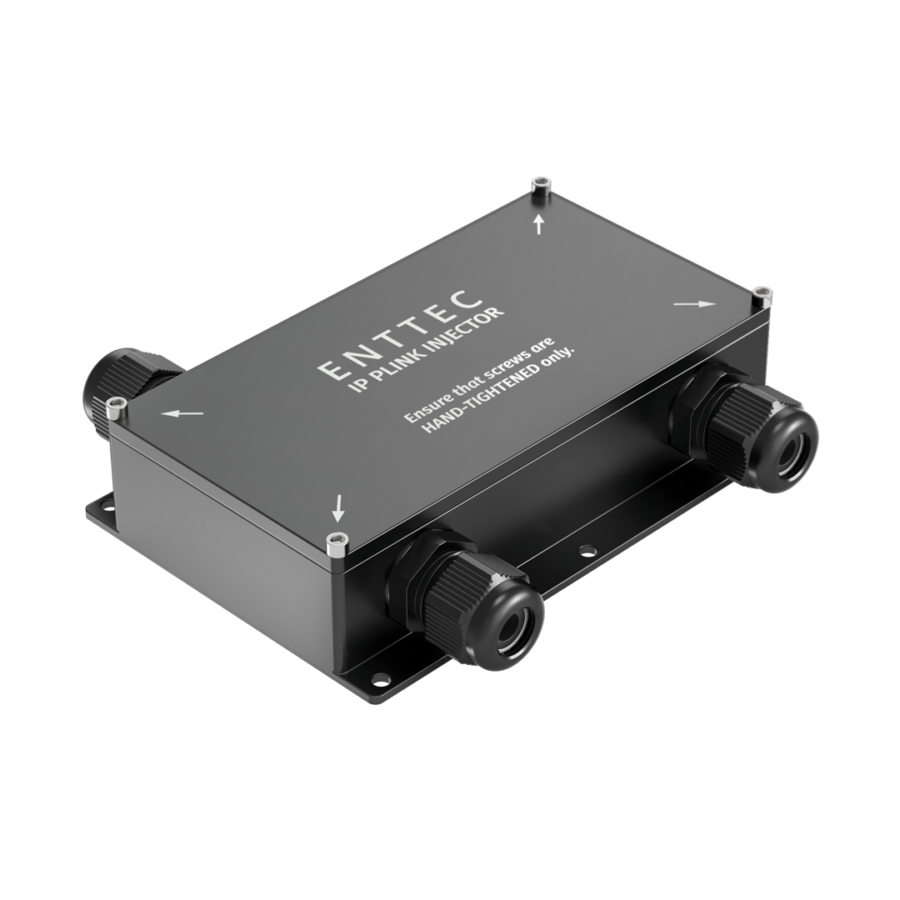
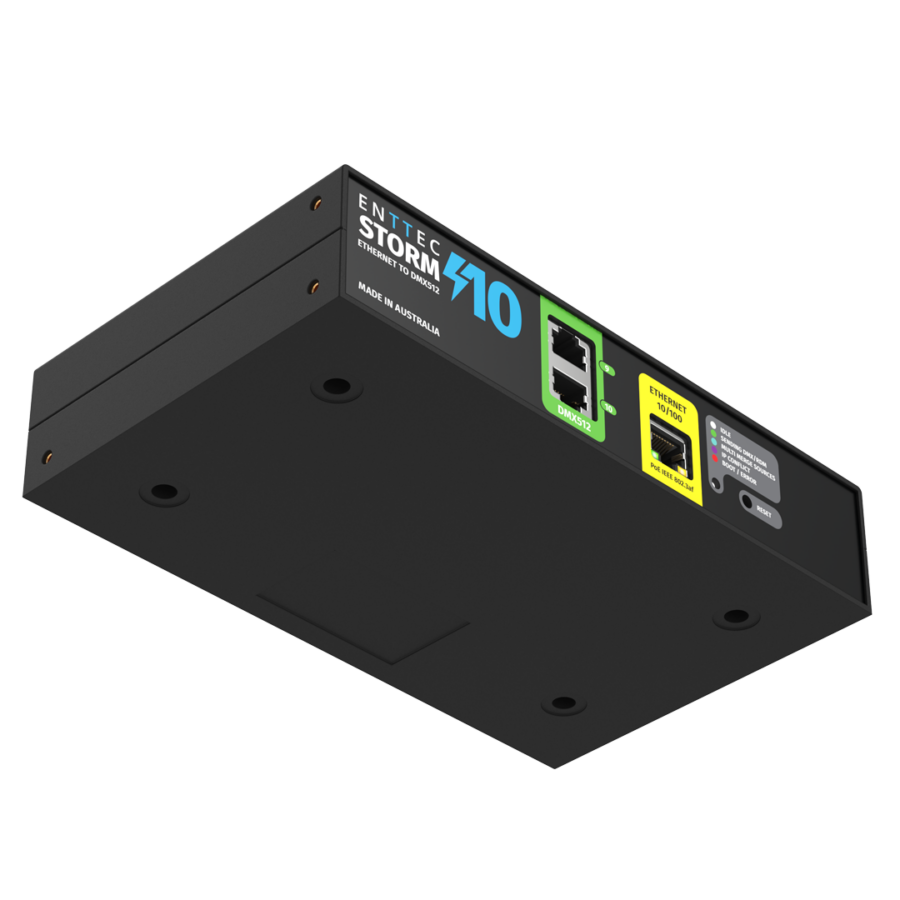
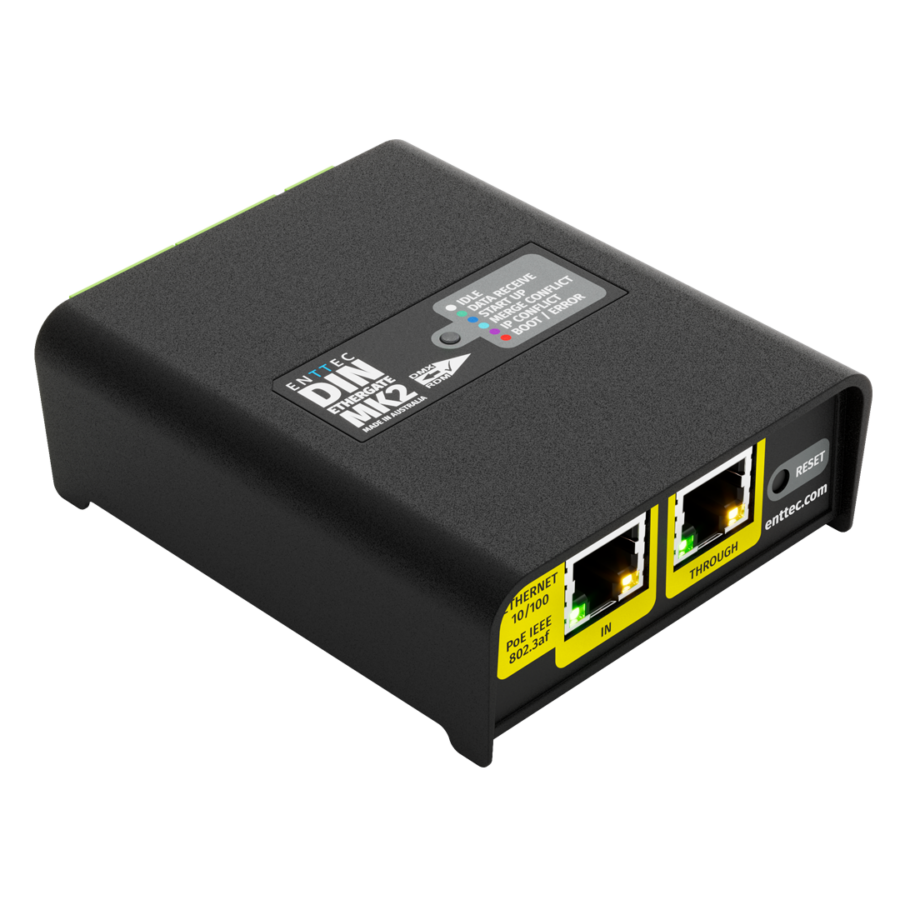
Mapping an installation? ELM, ENTTEC's free LED pixel mapping software, drives the controllers above over Art-Net and sACN, from a single fixture to building-scale maps.
ENTTEC has been engineering lighting control in Australia since 1999, and shipping LED pixel controllers since the original Pixelator in 2014.