



GS8523 Pixel Protocol
Manufacturer: Genesis-SystechThe GS8523 is a Genesis-Systech DMX512 LED driver IC in an SOP8 package that decodes a standard DMX512 signal to drive a 3 channel RGB pixel with 16-bit (65536 level) grayscale at a 9.5kHz refresh rate, with automatic address coding.
Specifications
| Specification | Detail |
|---|---|
| Clock Type | DMX512 |
| Color Resolution | 16 Bits |
| Physical Package | SOP8 |
| RGB | Yes |
| RGBW | No |
| Output Pixel Voltage | 7 to 30V |
| PWM Rate | 9.5kHz |
| Suitable Camera | Suitable for typical broadcast/cinema frame rates. At a 9.5kHz refresh rate the GS8523 sits in the mid band, comfortable for common broadcast and cinema frame rates. |
| Redundant Data Line | No (DMX bus) |
Strengths
- 16-bit grayscale (65536 levels per channel) for smooth, high-resolution dimming
- Automatic address coding lets each node self-assign its DMX address, simplifying large installs
- Wide 7 to 30V operating range in a small SOP8 package, and 9.5kHz refresh keeps it comfortable for common broadcast and cinema frame rates
Limitations
- RGB only (3 channels, no dedicated white channel), so it cannot drive an RGBW pixel
- As a DMX512 driver IC it has limited English-language datasheet presence, so integration details are best confirmed against the first-party specification
Overview
The GS8523 is a DMX512 LED driver IC from Genesis-Systech (Shenzhen Junlue Technology). Rather than using a self-clocked single-wire pixel protocol, it receives a standard DMX512 control signal and decodes it locally to drive a 3 channel RGB output. It carries 16-bit grayscale (65536 levels per channel) for fine dimming resolution and refreshes at 9.5kHz, which keeps the output comfortable for typical broadcast and cinema frame rates. The chip works across a wide 7 to 30V supply range in a compact SOP8 package, and its automatic address coding feature lets each fixture self-assign its DMX address along the bus, simplifying installation on large runs. ENTTEC is not affiliated with Genesis-Systech.
Compatible ENTTEC controllers
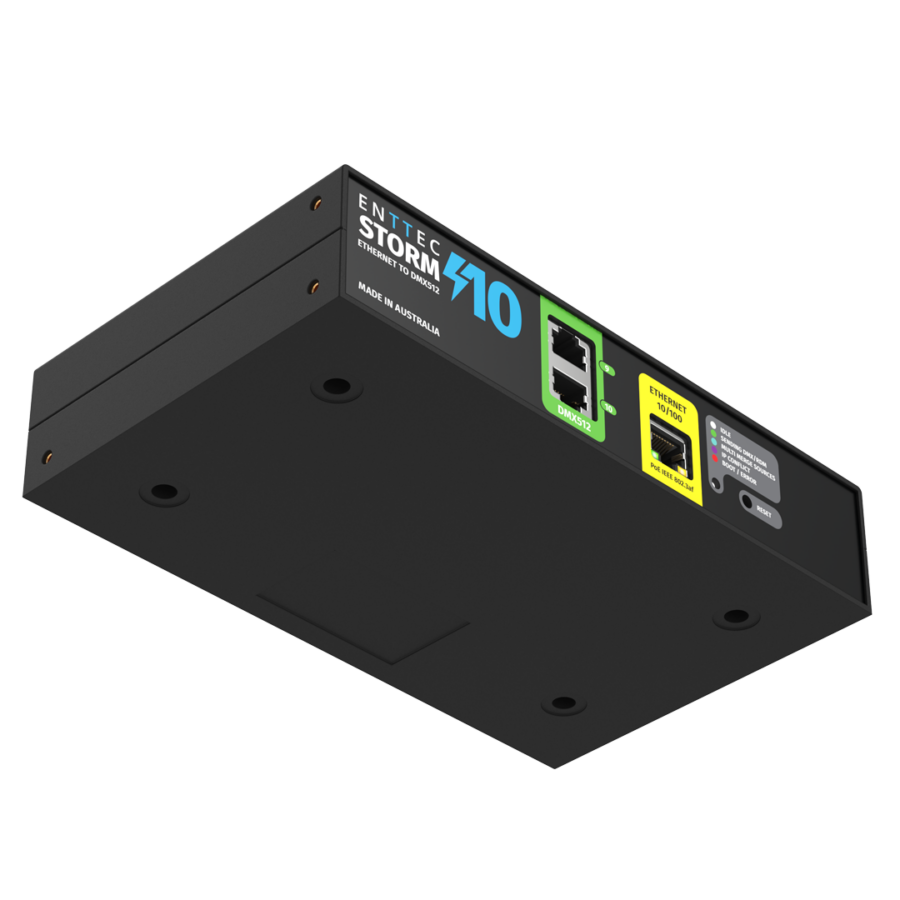
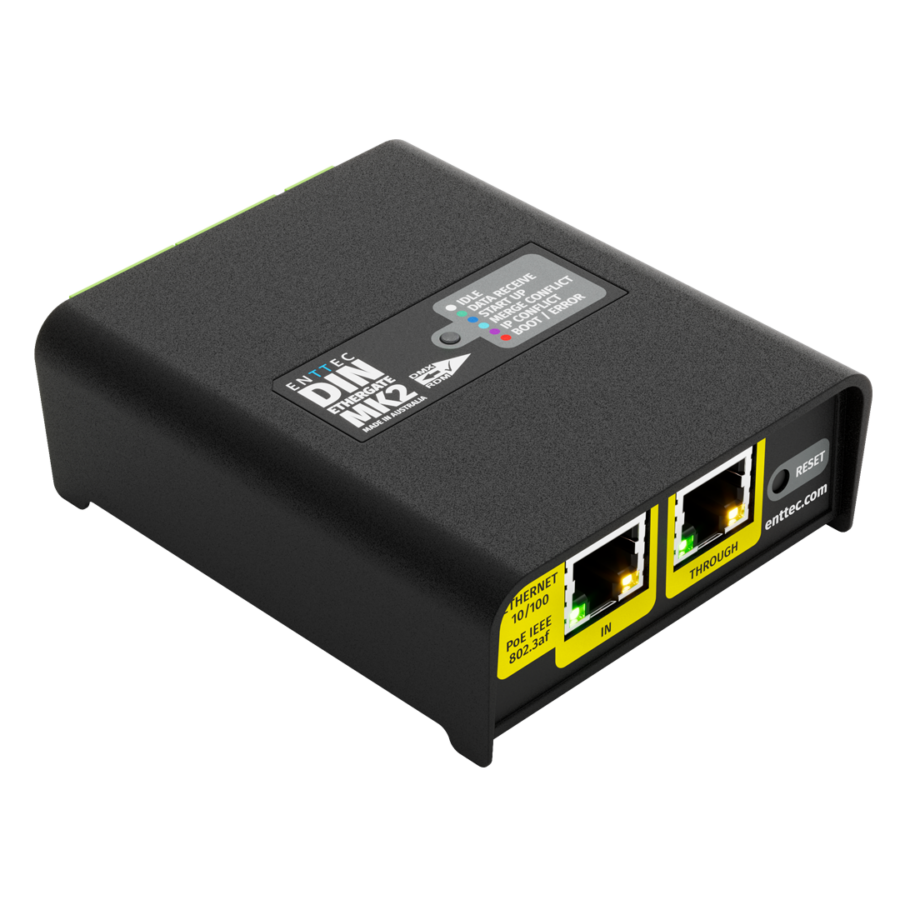
Mapping an installation? ELM, ENTTEC's free LED pixel mapping software, drives the controllers above over Art-Net and sACN, from a single fixture to building-scale maps.
ENTTEC has been engineering lighting control in Australia since 1999, and shipping LED pixel controllers since the original Pixelator in 2014.