



GS8513 Pixel Protocol
Manufacturer: Genesis-SystechThe GS8513 is a Genesis-Systech DMX512 LED driver IC in an SOP8 package that decodes a standard DMX512 signal to drive 3-channel RGB pixels with 16-bit (65536-level) grayscale at a 9kHz refresh rate over a 7 to 36V supply.
Specifications
| Specification | Detail |
|---|---|
| Clock Type | DMX512 |
| Color Resolution | 16 Bits |
| Physical Package | SOP8 |
| RGB | Yes |
| RGBW | No |
| Output Pixel Voltage | 7 to 36V |
| PWM Rate | 9kHz |
| Suitable Camera | Suitable for typical broadcast/cinema frame rates |
| Redundant Data Line | No (DMX bus) |
Strengths
- 16-bit grayscale (65536 levels) per channel for smooth, fine-grained dimming and colour transitions
- Wide 7 to 36V operating supply, flexible across common LED strip and module voltages
- Standard DMX512 decoding in a compact SOP8 package, driven by any DMX512 source without a custom pixel protocol
- 9kHz refresh rate suitable for typical broadcast and cinema frame rates
Limitations
- RGB only (3 channels), with no dedicated white channel
- Little English-language datasheet presence, as documentation is primarily first-party Genesis-Systech material
Overview
The GS8513 is a DMX512 LED driver IC from Genesis-Systech (Shenzhen Junlue Technology), supplied in a compact SOP8 package. Rather than using a self-clocked single-wire pixel protocol, it receives and decodes a standard DMX512 control signal directly at the fixture and drives a 3-channel RGB output. It provides 16-bit grayscale per channel (65536 levels), which supports smooth, fine-grained dimming and colour blending, and operates from a wide 7 to 36V supply, making it flexible across common LED strip and module voltages. Its 9kHz PWM refresh rate falls comfortably in the range suitable for typical broadcast and cinema frame rates. Because the part is a DMX512 decoder, it is driven by any standard DMX512 source and does not require a custom pixel protocol definition. ENTTEC is not affiliated with Genesis-Systech.
Compatible ENTTEC controllers
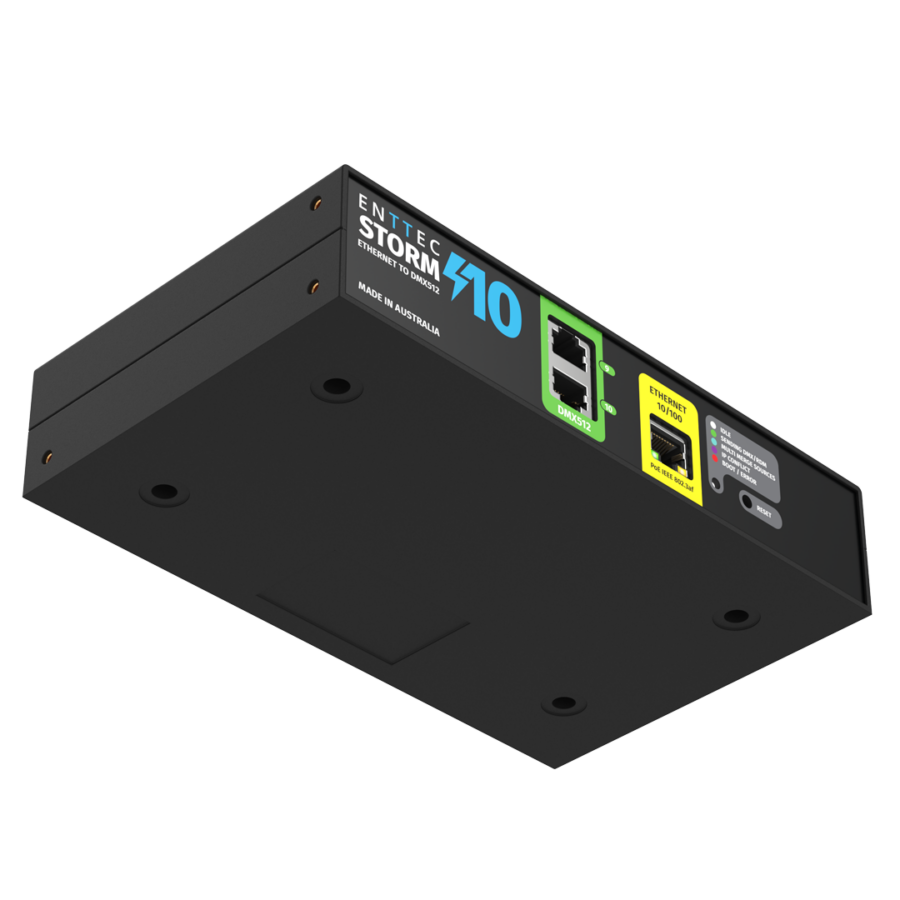
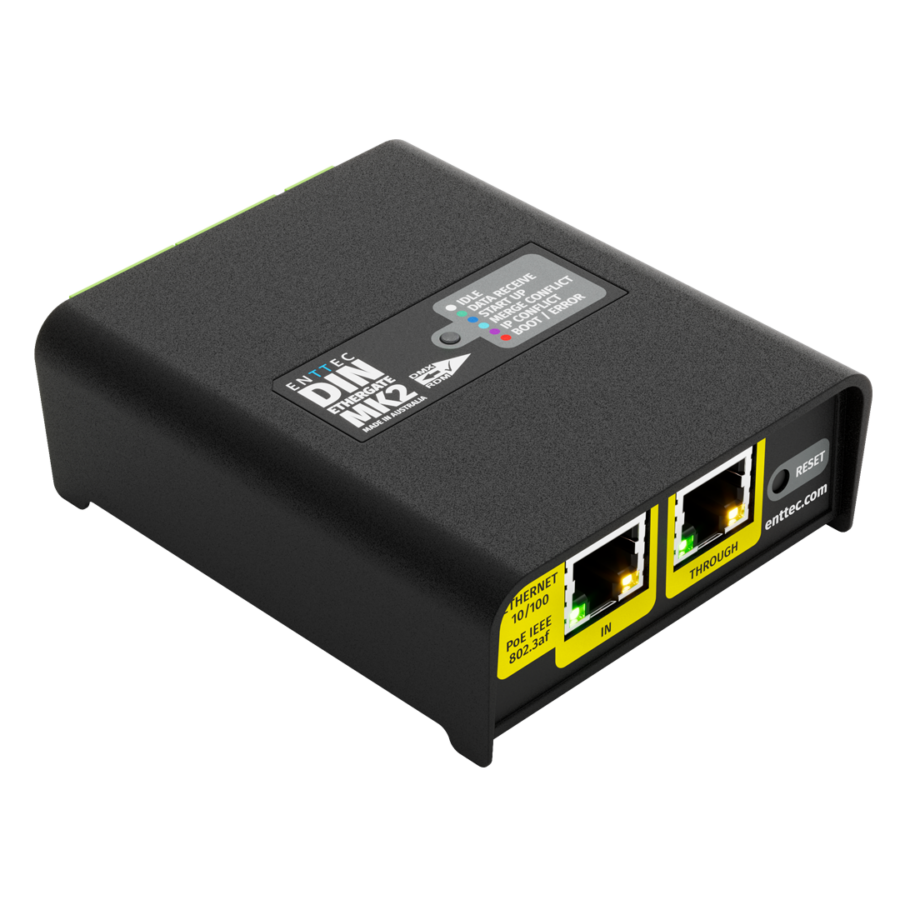
Mapping an installation? ELM, ENTTEC's free LED pixel mapping software, drives the controllers above over Art-Net and sACN, from a single fixture to building-scale maps.
ENTTEC has been engineering lighting control in Australia since 1999, and shipping LED pixel controllers since the original Pixelator in 2014.